Why Teams Struggle With Voice Messages and How AI Voice Replies Help

Voice communications have quietly become one of the most common ways for teams to talk to each other. On platforms like WhatsApp and Telegram, voice notes are now used for quick updates, explanations, handovers, and even decision-making.
At first glance, voice messages feel efficient. They are faster than typing, more expressive than text, and convenient when people are on the move. But as teams grow and communication increases, voice messages start creating friction instead of saving time.
Long audio notes are hard to review, easy to miss, and difficult to manage in busy group chats. Important details get buried inside minutes of audio. Team members replay messages repeatedly or delay responses because listening is not always possible.
This is where many teams begin to struggle.
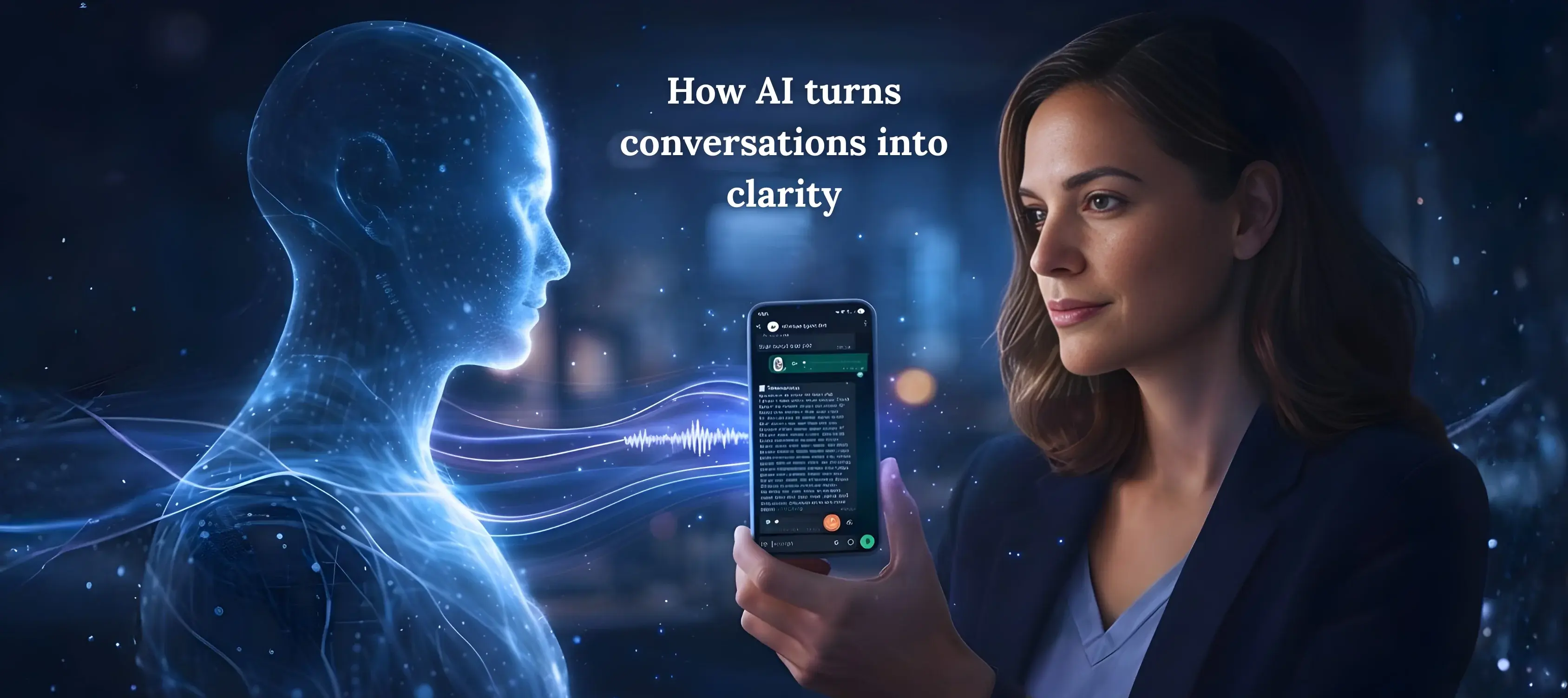
In response, a new category of tools is emerging: AI agents inside messaging apps that convert voice messages into AI voice replies, text, and summaries. These tools don’t replace voice communication. Instead, they make it easier to understand, review, and act on voice messages without breaking existing workflows.
This article explores why teams struggle with voice messages, what breaks down as communication gets bigger, and how AI voice replies help teams communicate more clearly and efficiently.
Voice messaging did not become popular by accident. It solves real problems, especially in modern work environments.
Many teams today are:
Remote or hybrid
Distributed across time zones
Working from mobile devices
Communicating across languages
In these situations, voice messages feel natural.
People use voice notes for the following reasons:
Save time over writing long messages
Allow complex ideas to be explained verbally
Reduce misunderstandings caused by short text messages
Feel more personal than written communication
For managers, founders, and team leads, voice messages are often used to explain context, give instructions, or share updates quickly.
For team members, voice notes make it easier to respond while commuting, multitasking, or switching between tasks.
So the intention behind voice messages is good.
The problem appears when voice becomes the default, and teams rely on it heavily without structure.
Voice messages work well in small doses. But as usage increases, several challenges appear that slow teams down instead of helping them.
Text can be scanned. Audio cannot.
When a team member gets a long voice message, they need to:
Find a quiet moment
Listen from start to finish
Replay parts to catch details
This becomes a problem when:
Time is limited
Messages are long
A lot of voice notes come in a short amount of time.
In fast-moving teams, people don’t always have the ability to listen immediately. Messages get postponed, forgotten, or misunderstood.
Voice messages have no structure.
Key decisions, deadlines, or instructions are often hidden inside:
Casual explanations
Long stories
Unstructured thinking
When teams rely heavily on voice notes:
There is no quick reference point
People ask the same questions again
Information must be repeated
This leads to confusion and unnecessary follow-ups.
Unlike text, voice messages demand full attention.
Team members may be:
In meetings
In public spaces
In different time zones
They cannot always listen immediately. This causes:
Delayed responses
Broken conversation flow
Gaps in decision-making
Over time, communication becomes slower rather than faster.
In team group chats, voice messages create additional friction.
When multiple people send audio:
Context gets lost
Conversations overlap
Catching up becomes difficult
New team members or people joining later must listen to several voice notes just to understand what happened.
This discourages engagement and increases misalignment.
Many teams today are multilingual.
Voice messages can be harder to understand due to:
Accents
Speaking speed
Mixed languages
Even fluent speakers may miss details. This leads to misunderstandings, especially in professional settings where clarity matters.
Before AI tools, teams had very limited options for handling voice messages.
Common approaches included:
Replaying audio multiple times
Manually taking notes
Asking senders to repeat information in text
Forwarding messages to others
These are the ways:
Taking a lot of time
Not always the same
Based on how people do things
As teams grow, these manual methods stop working.
Voice communication needs structure, not just more listening.
AI agents inside messaging apps are designed to solve this exact problem by making voice messages easier to understand and act on.
Instead of treating voice messages as passive audio, Karsaaz Agent turns them into structured, usable information directly inside WhatsApp and Telegram.
When a voice note is sent or forwarded to Karsaaz Agent, the response may include:
A short AI voice reply summarising the message
A clear voice to text transcription
Bullet-point summaries highlighting key points
This gives teams multiple ways to review the same message, depending on their time and situation.
AI voice replies are not just another feature. They change how teams interact with voice communication.
Team members can do the following instead of listening to a long message:
Listen to a quick voice reply that gets to the point.
Decide if they need to listen further
This saves time and makes things easier to think about.
Many teams prefer voice communication. AI voice replies respect that preference.
People can:
Listen hands-free
Stay in audio mode
Avoid switching to long text when unnecessary
This keeps communication natural.
Alongside voice replies, text transcription and summaries:
Make information searchable
Allow quick scanning
Help with documentation and follow-ups
This combination turns unstructured audio into structured communication.
After the voice reply provides context, text transcription helps teams work with the information.
When voice messages are converted into text:
Important details are easier to revisit
Key points can be copied or shared
Decisions and instructions are easier to track
For teams using Karsaaz Agent for voice to text transcription inside WhatsApp, this means less repeated listening, faster understanding, and clearer follow ups while keeping conversations voice-first.
Karsaaz Agent fits naturally into everyday team communication, especially in environments where voice messages are used frequently.
Managers often share updates through voice messages to save time.
With this approach:
Teams receive a short voice reply that captures the main update
Text transcription highlights important details
Everyone stays aligned without replaying long audio
In active group chats, multiple voice notes can quickly become difficult to follow.
Here, voice replies provide quick context, while summaries show what matters most.
This helps new team members catch up faster and reduces unnecessary follow-up questions.
For teams working across different time zones, voice messages often arrive when others are unavailable.
Messages can be reviewed at any time, with voice replies offering immediate understanding and reducing the need to schedule overlapping hours.
In global teams, language differences can slow down communication.
When supported and when explicitly requested by the user, voice replies supported by text transcription can help reduce misinterpretation and improve clarity in multilingual conversations, making collaboration smoother across regions.
Businesses are not adopting AI-assisted voice tools because they are trendy.
They are adopting them because voice-heavy communication has become harder to manage as teams grow.
Teams look for solutions that help them:
Save time by reducing repeated listening
Lower misunderstandings in fast-moving conversations
Respond more quickly without needing full audio playback
Continue working inside the messaging platforms they already use
Because these tools operate directly inside WhatsApp and Telegram, teams do not need to introduce new apps or change how they communicate. This makes adoption simple and practical, especially for busy teams.
When voice data is involved, privacy and control matter.
Karsaaz Agent processes voice messages only when users explicitly choose to send or forward them to generate a response. The system does not perform background listening or continuous monitoring. Karsaaz Agent does not maintain a user-facing transcript library or saved conversation history, and voice processing occurs on request to produce the selected output. Usage is intended to remain transparent and aligned with defined plan limits.
This approach helps teams benefit from AI support while staying in control of their communication.
Aspect | Traditional Voice Messages | AI-Assisted Voice Handling |
Review speed | Slow and time-consuming | Faster and more flexible |
Structure | Unstructured audio | Voice reply, text, and summaries |
Searchability | Not possible | Available through transcription |
Team scalability | Difficult | Designed to scale |
Language clarity | Often limited | Improved with structured outputs |
This comparison explains why structured voice handling works better as teams and conversations expand.
It is important to be clear about one thing.
AI does not replace people or human conversations.
Instead, it helps teams:
Understand messages more quickly
Reduce unnecessary repetition
Improve clarity in busy chats
The original voice message remains central. AI simply makes spoken information easier to review, understand, and act on.
Teams usually see the most impact when:
Voice messages are used frequently
Group chats are active and fast-moving
Time to respond is limited
Teams are remote, distributed, or multilingual
In these environments, unstructured voice communication becomes a bottleneck.
Structured voice handling helps teams stay aligned without changing existing habits.
Voice messages themselves are not the problem.
The challenge begins when voice communication grows without structure.
As teams rely more on messaging apps and collaborate across locations and languages, they need better ways to handle spoken information.
By combining short voice replies with voice-to-text transcription and concise summaries, teams gain flexibility. They can listen, read, or scan depending on the situation, without replaying long audio messages.
Tools such as Karsaaz Agent demonstrate how this approach can improve communication while fitting naturally into WhatsApp and Telegram. The result is clearer conversations, less friction, and communication that remains human.
If your team relies heavily on voice notes and struggles with clarity, structured voice support can help without changing how people communicate.
You can explore this directly inside your existing chats:
Frequently Asked Questions
Why do teams struggle with voice messages?
Teams struggle because voice messages are hard to scan, time consuming to replay, and difficult to reference later, especially in busy group chats.
Are voice messages bad for team communication?
No. Voice messages are useful, but problems arise when they are used without structure. Long or frequent voice notes can slow down responses and cause confusion.
How do AI voice replies help teams?
AI voice replies provide a short spoken summary of a voice message, helping teams understand the context quickly without listening to the full audio.
What is voice to text transcription and why is it useful?
Voice to text transcription converts audio messages into readable text, making information easier to review, search, and share within teams.
Can teams use AI voice replies inside WhatsApp?
Yes. Karsaaz Agent work directly inside WhatsApp and Telegram, allowing teams to handle voice messages without installing new apps.
Does AI replace human communication in teams?
No. AI supports communication by improving clarity and reducing repetition, while the original human voice message remains central.
Is voice data stored when using AI voice tools?
Responsible tools process voice messages only to generate requested outputs and do not store conversations as notes or history.
Which teams benefit most from AI-assisted voice communication?
Remote teams, distributed teams, multilingual teams, and groups that rely heavily on voice messages benefit the most.